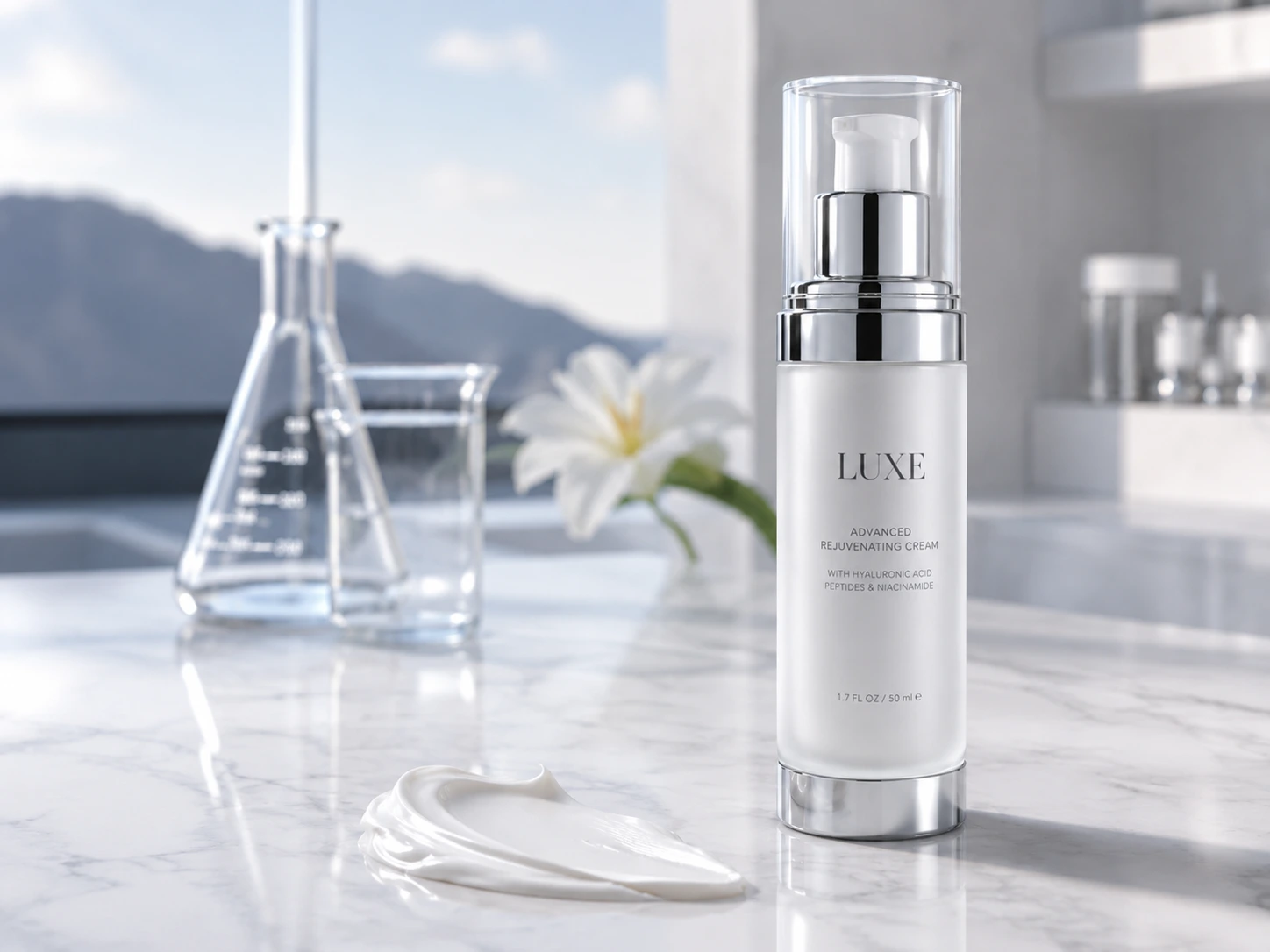
Walking retail aisles or unboxing prestige skincare you have probably noticed packs with no skinny dip tube. As you pump, a base piston inches upward inside the cavity. Industry shorthand for that geometry is an airless bottle : a vacuum-driven dispenser that trades atmospheric pressure for piston mechanics, keeping oxygen permanently outside the formula.
Buyers often panic if the wand is missing until they realise the actuator is behaving exactly as engineered. Done well, vacuum delivery is upstream insurance for sensitive concentrates. Here is why it earns a mandatory line on any serious cosmetic packaging brief.
How the airless mechanism actually works
Classic fragrance or lotion pumps equalise pressure by letting outside air backfill the headspace. Oxygen is the accelerant for colour shift, off notes, and inactivated actives : vitamin C, retinoids, peptides all succumb faster once the seal breaks. Every pump stroke is also a contamination event, however minor.
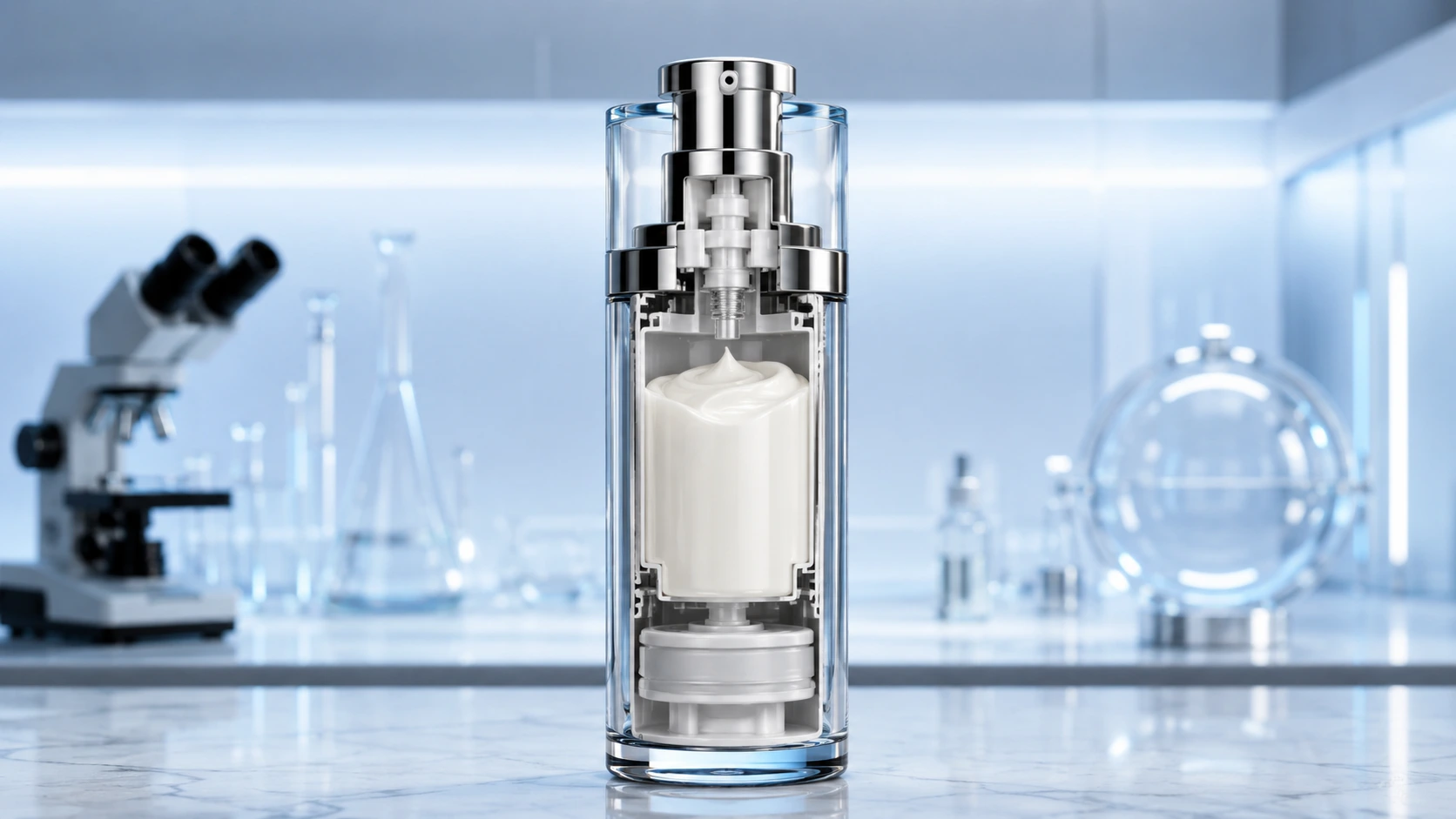
Airless systems replace that backfill with a mobile piston. Every press advances a disc that scrapes the inner wall, so product rides up without ingesting ambient air. That makes it realistic to stay on clean beauty guardrails without leaning on preservative cocktails. Shelf life extends not through chemistry but through physics. For a broader look at how packaging choices affect sustainability, see our sustainable packaging guide.
How does an airless bottle differ from a standard pump bottle?
In short, the difference comes down to the mechanism: a standard pump bottle draws product upward and lets outside air backfill the headspace with every stroke. An airless bottle instead uses a rising internal piston to push product out, so no air ever enters the chamber — meaning the formula can't oxidise, get contaminated, or degrade. That's why airless packaging slows degradation dramatically compared with a standard pump for formulas built on vitamin C, retinol, or natural oils.
Which formulas make airless mandatory?
Not every formula needs vacuum protection, but certain actives make it non-negotiable. L-ascorbic acid (vitamin C) in pure form degrades to the point of discolouration within weeks of repeated air exposure. Retinol and retinoid derivatives are equally fragile. Peptide complexes lose binding integrity under oxidative stress. Probiotic or live-culture formulas may simply die in a conventional pump within days of first use.
Beyond those headline cases, high-AHA exfoliants, niacinamide at elevated concentrations, plant-oil bases rich in polyunsaturated fatty acids, and vitamin E blends all benefit measurably from air exclusion. If your formula carries any of these, the performance your customer opens on day one should still be there on day sixty. Airless packaging is the engineering commitment behind that promise.
Evacuate to the last dose
Dip tubes notoriously leave heel stock: the dreaded last ten percent trapped under the inlet. Vacuum geometry pushes almost everything through the actuator, which matters when your SKU is priced like a hero serum. Treat airless bottles as experiential insurance for premium categories. Buyers notice when expensive fluid actually empties instead of mocking them from the shoulder of the jar. Loyalty uplift on high-margin lines regularly offsets the modest unit cost premium over conventional pumps.
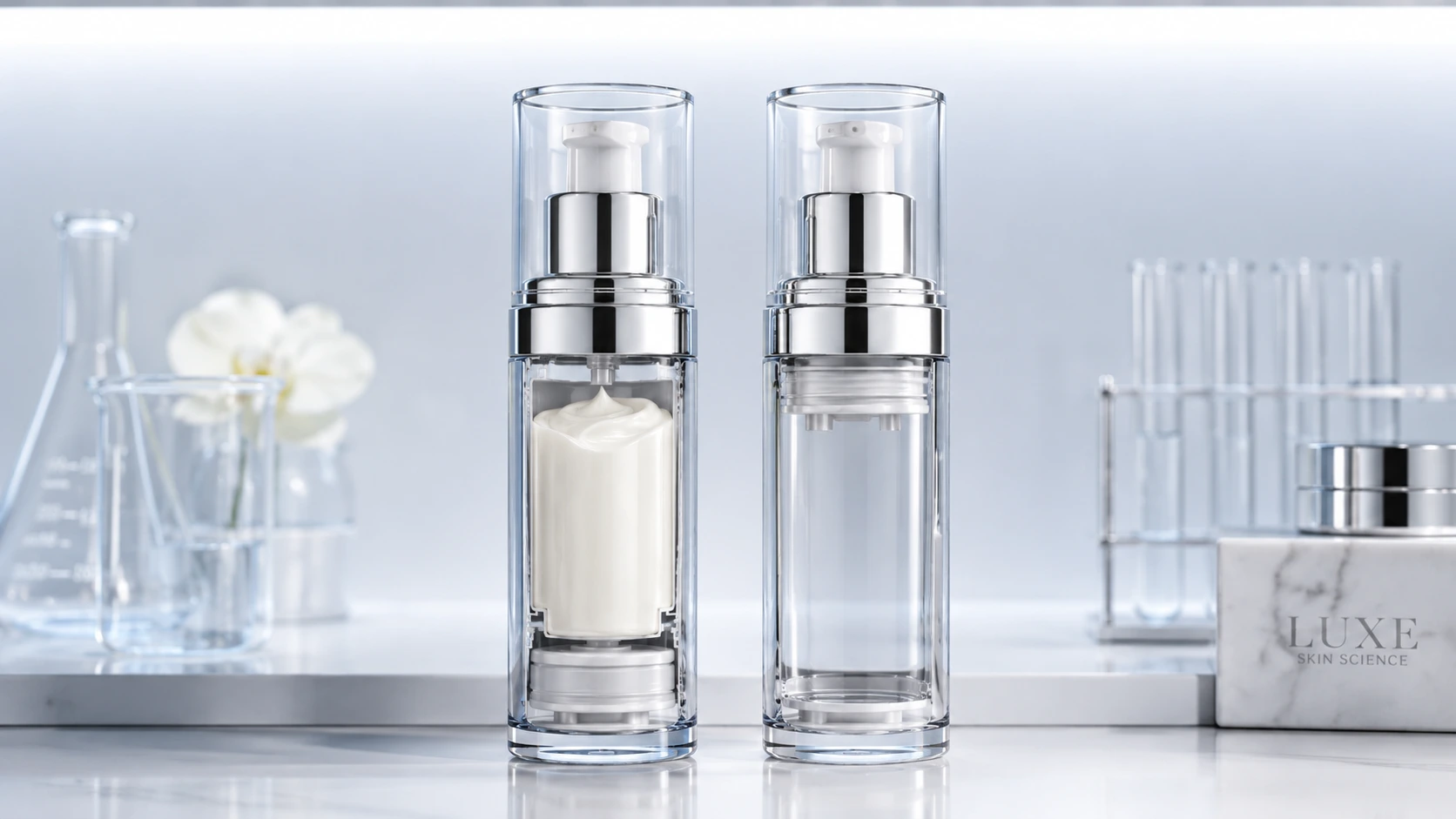
Recovery rates above ninety-five percent are typical on well-spec'd piston geometry. The empty pack arrives spotless , visually confirming that every millilitre was accessible. That closing-act moment reinforces perceived value in a way no marketing copy can replicate.
Airless packaging
Not sure which airless format fits your formula?
Tell us your formula type serum, cream, or gel and we'll recommend the right airless body, volume, and MOQ.
WhatsApp Us Contact FormAirless format options: which one fits your formula?
Cylindrical airless bottles (15–50 ml) are the default for serums and lightweight emulsions. Narrow-mouth, tall geometry suits low-to-medium viscosity. The silhouette reads clinical and modern , ideal for results-driven skincare lines.
Airless cream jars handle high-viscosity formulas: night creams, eye balms, thick emollients. Wide-mouth access with full vacuum integrity. On a vanity they communicate indulgence and intentional ritual.
Airless tubes are the travel-format answer for SPF, BB, and multi-benefit formulas. They preserve piston mechanics while offering the squeezability and portability consumers expect from tube packaging.
Dual-chamber airless systems keep two formulas isolated until dispensing , perfect for A+B activation systems where vitamin C and niasinamide need separation until use. These command a price premium but generate substantial editorial attention.
Design where engineering signals luxury
Airless shells read modern out of the box: dense bases, quiet actuation, controlled back pressure. Paired with kiln-fired screen printing or bespoke glass painting, the pack stops looking like a laboratory specimen and starts reading like a design object. Because the outer wall is a canvas, metallic vertical logos on tall cylinders or thick-walled jar-and-insert combos for night treatments both work exceptionally well.
The tactility of the pump stroke is part of the product experience. Heavy actuators with controlled resistance communicate precision dosing and product potency without a single word of copy. In a category where the sample table converts better than Instagram, that haptic signature is earned territory.
Wholesale procurement: MOQ, cost framing, filling compatibility
When wholesale procurement should spec airless: if your formula is oxygen-shy, vitamin-led, or simply expensive per millilitre, airless is usually the highest ROI insurance you can buy before scale. Returns from oxidised stability failures and consumer disappointment reliably cost more than the unit price delta over standard pumps.
MOQ on stock airless formats runs lower than on bespoke tooling. Custom colours or forms push the floor upward, but the breakeven calculation versus formula stability investment usually favours airless well before mass-market volumes. One note on filling: airless piston bottles require bottom-fill or specialised top-fill equipment. Confirm your contract manufacturer has the line before locking the body.
"Airless is not just a pack format. It is the physical proof that your formula investment is protected to the last pump."
Yurtenpack product team
Request a sample
Request an airless sample before you commit
We always run a sampling stage. Hold the format in your hands before placing a bulk order.
Request Sample → Contact FormFrequently asked questions
What viscosity range works in airless dispensers?
Can airless bottles be decorated with screen printing?
How does filling differ from standard pump bottles?
Yurtenpack spans catalogue glass perfume bodies through piston jars and turnkey decoration. Packaging is rarely "just a container"; it is your first tactile contract with the shopper. Matching the right format to your formula and brand positioning is the decision that compounds across every subsequent SKU.